1. The Black-Box Reality: Why Raw Pixels Produce Mediocre Traffic
For over a decade, performance marketing was an engineering discipline of granular targeting: media buyers painstakingly constructed Single Keyword Ad Groups (SKAGs), tested narrow demographic clusters, excluded low-performing geographic regions, and actively managed placement blacklists.
Over the past two years, ad networks systematically dismantled those controls. Meta Advantage+, Google Performance Max (PMax), and TikTok Smart Performance Campaigns have locked manual targeting levers behind automated black boxes. Advertisers can no longer micro-manage who sees their ads or where they appear.
Signal is your only remaining steering wheel.
Modern bidding engines optimize on a closed loop: they bid aggressively for users who resemble the signals you send them. If you feed the algorithm raw, unmanipulated top-line revenue data, you fall directly into the blind ad algorithm trap:
- Low-Margin Clearance Sales: A $500 order on 2% margin electronics ($10 profit) is treated identically to a $500 order on 70% margin apparel ($350 profit). The algorithm bids up low-margin buyers.
- Chronic Wardrobers: Serial returners who purchase five items to keep one look like high-value whales to Meta, prompting the algorithm to recruit more refunders.
- Brand Loyalist Cannibalization: Repeat organic buyers who convert organically are tracked as ad successes, encouraging algorithms to burn budget on easy retargeting loops instead of cold prospecting.
- Bot & Scraper Conversions: Datacenter bots filling form fields or triggering fake cart events trick algorithms into buying more bot-filled inventory.
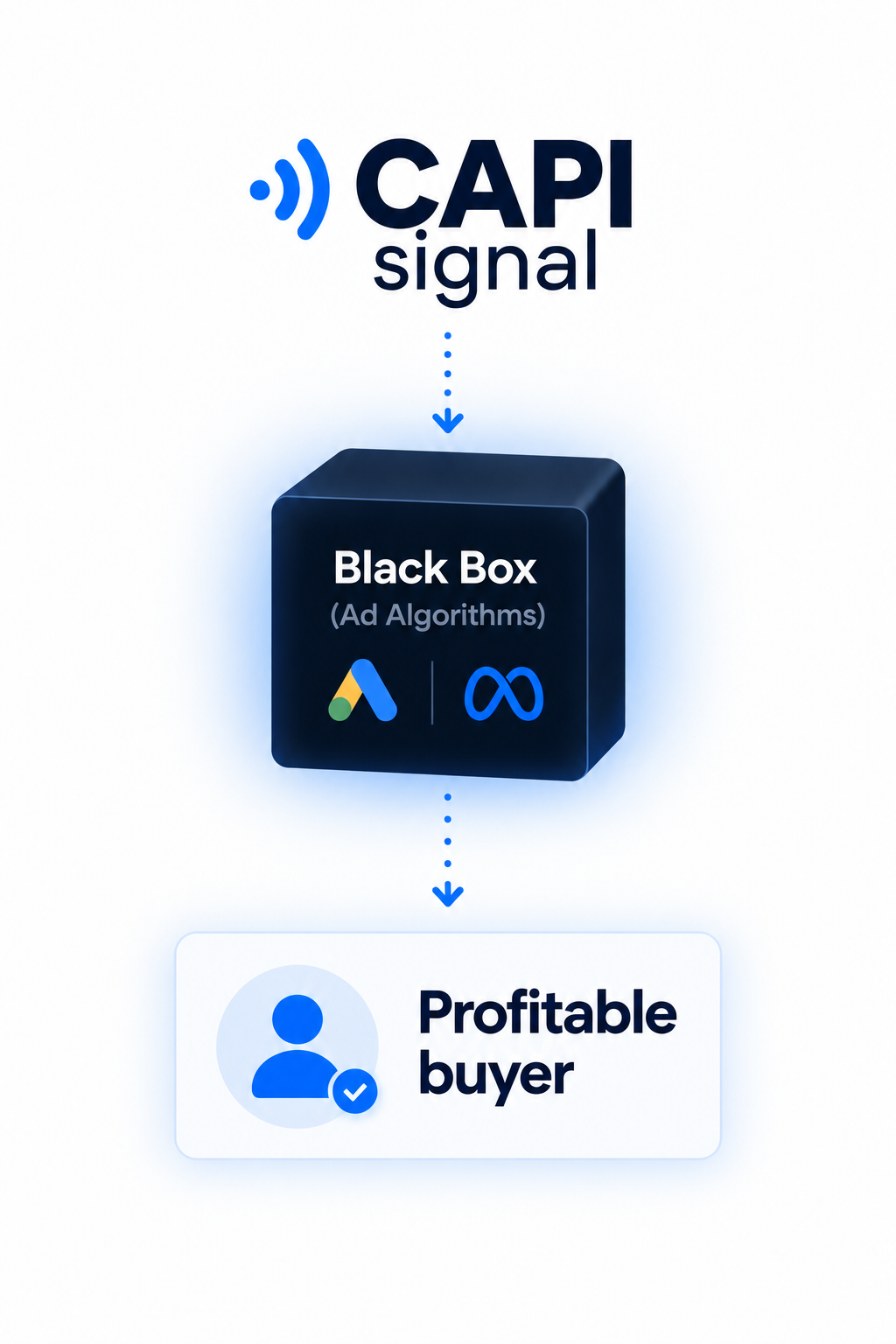
Figure 1: Inside the modern ad network, bidding algorithms are self-contained black boxes. The CAPI signal is the sole remaining lever to steer traffic quality.
2. The 3x Better Traffic Equation
How does signal governance transform traffic quality from mediocre to 3x better? It does not require rewriting ad copy or increasing daily budgets. Instead, it systematically alters the value function the auction engine maximizes.
In a standard setup, Meta Advantage+ maximizes for:
Under CAPI Control, the conversion payload is rewritten at the edge in sub-5ms before it ever reaches Meta Graph API or Google CAPI:
When the ad network receives pure net profit signals, 0-value bot payloads, deflated serial returners, and boosted first-time buyers, its mathematical equilibrium shifts completely. It stops competing in crowded auctions for bargain hunters and focuses its bid density on verified, high-retention buyers.
3. Lever 01: POAS Gross Margin Bidding
Ecommerce merchants frequently experience the "high ROAS, empty bank account" paradox: Meta Ads Manager proudly displays a 4.5x ROAS, but cash flow is negative because the algorithm scaled items with high fulfillment costs, razor-thin margins, or heavy supplier fees.
The Solution: CAPI Control integrates with Shopify or native ERP cost-of-goods-sold (COGS) feeds. When an order fires, the proxy calculates the exact contribution margin and transmits that as the primary conversion value:
{ "event_name": "Purchase", "custom_data": { "value": 500.00, "currency": "USD" } }
// CAPI Control POAS Overwrite (Contribution Margin)
{ "event_name": "Purchase", "custom_data": { "value": 45.00, "currency": "USD", "_cc_rule": "poas_margin_injection" } }
Instead of treating a $500 clearance order as a massive win, the algorithm registers $45 of value. Within one attribution window (7 days), Smart Bidding shifts auction bids toward high-margin catalog items, yielding an average +28% increase in net contribution profit.
4. Lever 02: Bot Conversion Defense & Click Fraud Silencing
Click fraud is no longer limited to banner ads. Sophisticated scrapers, headless Chromium instances, and datacenter proxies routinely emulate human shoppers—adding items to carts and submitting lead forms to harvest pricing or test stolen credentials.
When a standard pixel reports these sessions, ad networks rejoice: they detected an "engaged shopper" and promptly bid up auctions to acquire more users with identical behavioral and IP footprints. This creates a catastrophic bot retraining loop.
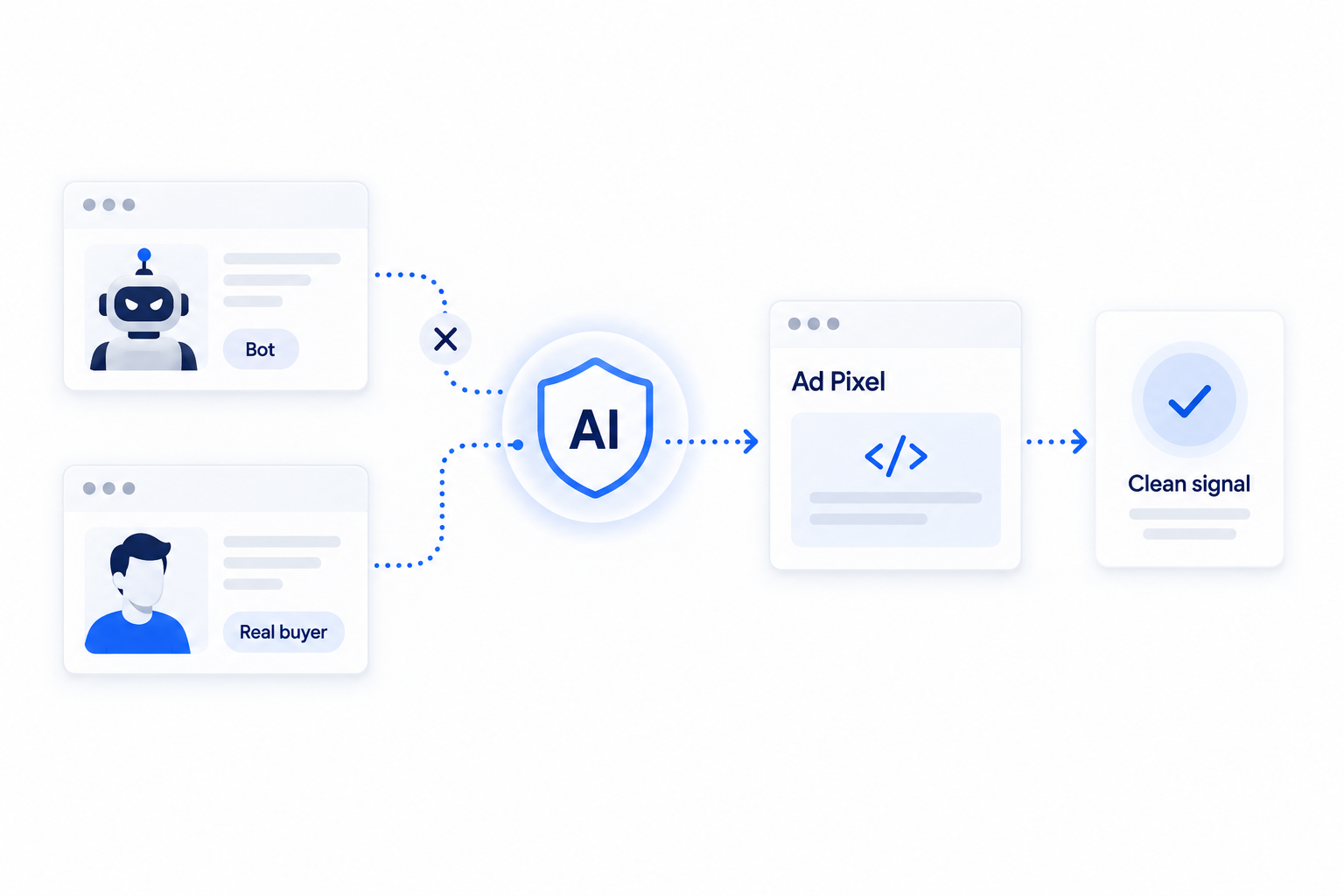
Figure 2: CAPI Control inspects 50+ hardware entropy signals at the edge. Non-human sessions produce 0 bytes upstream to Meta and Google.
CAPI Control inspects canvas hashes, WebGL extensions, battery APIs, and pointer jitter at the Cloudflare edge. If a session fails human verification, the payload is silenced (0 bytes dispatched). The ad algorithm never receives positive reinforcement from bot sessions, cutting wasted ad spend by up to 20%.
5. Lever 03: The Hot Buyer Shield (Flagship Engine)
“Your best customers are your competitive advantage. Stop giving their signals away for free.”
When a high-value customer, wholesale buyer, or VIP completes an order, what happens under standard tracking?
The pixel immediately broadcasts their hashed email, phone number, and purchase total to ad networks. Within hours, two destructive things happen:
- Retargeting Waste: The customer who just bought is bombarded with ads for the very product they purchased, wasting ad budget during a window when they cannot repurchase.
- Signal Leakage: Ad platforms use that customer's behavioral profile to seed lookalike models across their entire auction pool—including for competitor campaigns targeting your category.
The CAPI Control Staccato Rhythm:
With the Hot Buyer Shield, high-value signals are held in a secure first-party buffer for a configurable delay (default: 7 to 30 days). Once the customer's active evaluation window has passed, the conversion can be safely dispatched via CAPI for long-term LTV training without triggering wasteful immediate retargeting.
6. Lever 04 & 05: Whale Outlier Dampening & Net-New Multipliers
Whale Outlier Dampening: Stopping 1-Off Spikes From Breaking Targeting
A single B2B buyer places a $12,000 corporate gift order through your retail Shopify store. In standard CAPI, this massive outlier payload tells Meta's value model that your typical customer is worth $12,000. For the next 3 weeks, your cost per click skyrockets as the algorithm bids aggressively across high-ticket auctions searching for another phantom wholesale buyer.
Whale Outlier Dampening clamps reported conversion values to your store's 95th percentile (e.g. $450). Your CRM books the full $12,000, but the ad network receives a calm, calibrated signal that preserves campaign stability.
Net-New Customer Multipliers: Forcing Cold Prospecting
Algorithms naturally gravitate toward easy retargeting on existing brand loyalists because conversion rates are high and CPA looks deceptively low. This gives the illusion of strong ROAS while true customer acquisition collapses.
CAPI Control checks first-party customer order history at the edge. Verified first-time buyers receive an amplified conversion signal (1.5x), while repeat buyers are deflated (0.1x). This forces Advantage+ to hunt net-new prospects, driving a +52% increase in incremental new customer share.
7. Lever 06: Late-Night Time Intent Governance
Behavioral telemetry proves that time of day is a strong predictor of transaction viability. In high-ticket and apparel eCommerce, purchases made between 2:00 AM and 5:00 AM exhibit up to a 38% higher rate of morning-after cancellations, buyer remorse chargebacks, and stolen card testing.
Standard pixels fire full value at 3:42 AM. The algorithm infers that late-night traffic is highly receptive and reallocates your daily budget into midnight auctions.
CAPI Control holds 2–5 AM conversion events in a temporal buffer until morning order fulfillment clears. If the customer cancels before 8:00 AM, zero bytes ever leave the proxy. The ad network is never trained on remorseful buyers, slashing cancellation loss by -46%.
8. Executive Summary: Standard CAPI vs. Governed CAPI Control
| Operational Vector | Standard Pixel / Basic App | CAPI Control Signal Engine |
|---|---|---|
| Optimization Target | Raw top-line revenue (GMV) | Net contribution profit (POAS) |
| Bot Click Filtering | Transmits bot cart events | Silences 50+ hardware entropy vectors |
| Best Buyer Protection | Broadcasts VIP data immediately | Hot Buyer Shield delays/withholds signals |
| Whale Spikes | Destabilizes targeting for weeks | Clamps to 95th percentile repeatable AOV |
| New Buyer Acquisition | Over-indexes on repeat loyalists | 1.5x multiplier forces cold prospecting |
| Attribution Window | 7 days (Safari ITP cut) | 90-day cryptographic HMAC ledger |
9. Zero Engineering Overhead: The 2-Minute Drop-In Proxy
High-growth brands do not have engineering capacity to maintain custom Airflow pipelines or write edge workers. CAPI Control requires zero changes to your existing storefront code or analytics container.
In your server-side Google Tag Manager (sGTM) Meta CAPI tag or custom webhook, simply change the base API endpoint:
+ https://api.capicontrol.com/v19.0/{pixel_id}/events
The CAPI Control edge proxy authenticates via your existing Meta token, executes active signal manipulation agents in under 5 milliseconds, dispatches the enriched payload upstream, and returns Meta's genuine response back to your server.
Frequently Asked Questions
Why does feeding raw CAPI data give webmasters poor ad traffic?
Modern ad algorithms like Advantage+ and PMax optimize exclusively on conversion feedback data. When unmanipulated data is sent, the algorithm treats a low-margin $500 clearance order identically to a high-margin product, optimizes for chronic returners, and bids on bot sessions, degrading traffic quality over time.
How does CAPI Control get 3x better ad traffic?
By inspecting hardware entropy to silence bot conversions, deflating values on chronic returners, injecting pure contribution margin (POAS), clamping whale outlier spikes, and amplifying verified net-new buyers, the ad algorithm's auction equilibrium shifts to prioritize high-LTV, profitable traffic.
What is the Hot Buyer Shield and why shouldn't ad platforms see VIP data?
When VIP customers convert, standard pixels report their data immediately, causing algorithms to waste budget retargeting customers who already bought and leaking behavioral lookalike signals to competitors. The Hot Buyer Shield syncs CRM and fulfillment immediately while governing ad network signals.
Does CAPI Control require rewriting storefront or sGTM code?
No. In your sGTM or custom webhook tag, you simply replace graph.facebook.com with api.capicontrol.com. The proxy executes all active AI agents in sub-5ms at the edge with zero storefront code changes.
Ready to steer Meta & Google toward 3x better traffic?
Drop in CAPI Control in under 2 minutes. Transmit 100% of conversion signals free forever, or activate autonomous signal AI agents to get 3x better ad traffic.